
What Is the 30% Rule in Remodeling?
The 30% rule in remodeling is a simple guide that helps homeowners plan renovation budgets wisely. It suggests keeping total renovation costs below 30% of your home’s current market value. This protects your investment, maintains resale value, and ensures upgrades improve both style and functionality.
Whether you’re updating your kitchen, bathroom, or laundry room, the rule helps balance quality materials, practical layouts, and modern design without overspending.
Why Budgeting Matters
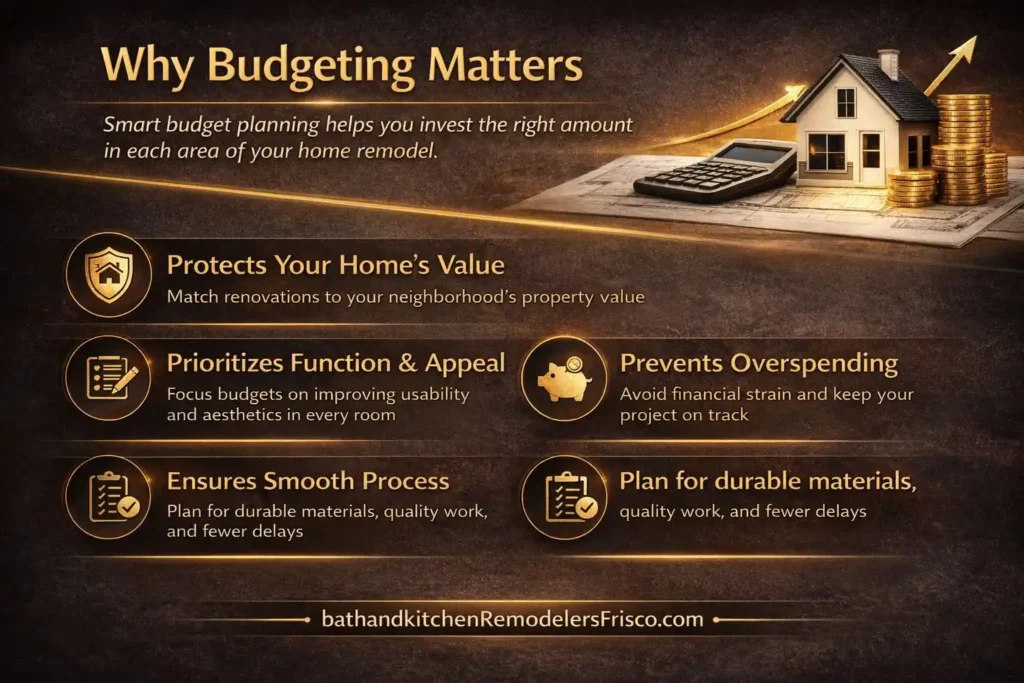
Budgeting is essential for any remodel. Staying within a reasonable budget prevents financial stress and keeps your project realistic. Key benefits include:
- Ensures renovations match your home’s value
- Prioritizes functionality and aesthetic appeal in every room
- Avoids overspending on upgrades that don’t increase resale value
- Helps plan for durable materials, energy-efficient appliances, and smart storage
Supports a smooth renovation process with fewer delays
Calculating Your Kitchen Remodel Budget with the 30% Rule
| Step | Action | Explanation | Example |
|---|---|---|---|
| Step 1 | Know Your Home’s Value | Check a recent appraisal, property tax record, or local real estate listings. This gives a clear starting point for planning your remodel budget. | Home value: $400,000 |
| Step 2 | Apply the 30% Rule | Multiply your home’s value by 0.3. This gives the maximum recommended budget for a kitchen remodel. | $400,000 × 0.3 = $120,000 maximum remodel budget |
| Step 3 | Factor in All Expenses | Include all possible costs to avoid budget surprises during the project. | Labor, contractor fees, cabinets, countertops, appliances, flooring, fixtures |
| Step 4 | Include Additional Costs | Consider permits, inspections, and design consultation fees that may be required during the renovation process. | Permit fees, inspection costs, designer consultation |
| Step 5 | Consider Optional Upgrades | Plan space in the budget for optional improvements that increase efficiency and long term value. | Energy efficient lighting, upgraded appliances, new windows |
Allocating Budget Across Home Spaces

Not all areas require the same investment. Typical allocation guides homeowners in planning costs wisely for each space.
Kitchen remodels: 10–15% of home value – invest in functional layouts, quality appliances, and modern finishes for best results.
Bathroom renovations: 5–10% – include durable fixtures, stylish tiling, and efficient storage solutions to enhance usability and appeal.
Laundry room remodeling: 2–5% – focus on practical storage, countertop space, and energy-efficient appliances for daily convenience.
Living room or bedroom upgrades: 3–7% – prioritize comfortable furniture, smart lighting, and aesthetic improvements that increase overall home satisfaction.
When to Follow the 30% Limit
The rule is most useful if:
- You plan to sell your home soon
- Your home is average in your neighborhood
- You want a strong return on investment
Exceeding the limit in these situations may reduce your ROI.
When Spending More Makes Sense
Sometimes spending above 30% is reasonable:
- Planning to stay long-term in the home
- Major structural repairs are required
- Full layout redesigns or room expansions
- Focus on high-end finishes and customization
This ensures your home is comfortable, modern, and functional, even if the cost is higher.
Conclusion :
The 30% rule in remodeling is a practical guide for homeowners who want stylish, functional upgrades without overspending. By staying under 30%, or carefully exceeding it when justified, you can improve your home’s aesthetics, functionality, and value. Planning carefully, allocating budgets per room, and working with professionals ensures a smooth, successful renovation.
FAQs
Is the 30% rule mandatory?
No, it is a guideline to help manage costs and protect your investment.
Does it include labor and materials?
Yes. Include contractor fees, materials, permits, and design services in the total budget.
Can I spend more than 30%?
Yes, if you plan to stay long-term or want high-end finishes and custom designs.
Does it apply to minor updates?
It is mostly for full-scale remodels. Small upgrades usually cost far less.
How do I track my remodeling budget?
Include all materials, labor, permits, and design costs and review regularly to avoid overspending.